Opinion: The statement of Royal Thai Army Spokeperson confirms that Thailand had a premeditated plan to forcefully seize territory from Cambodia

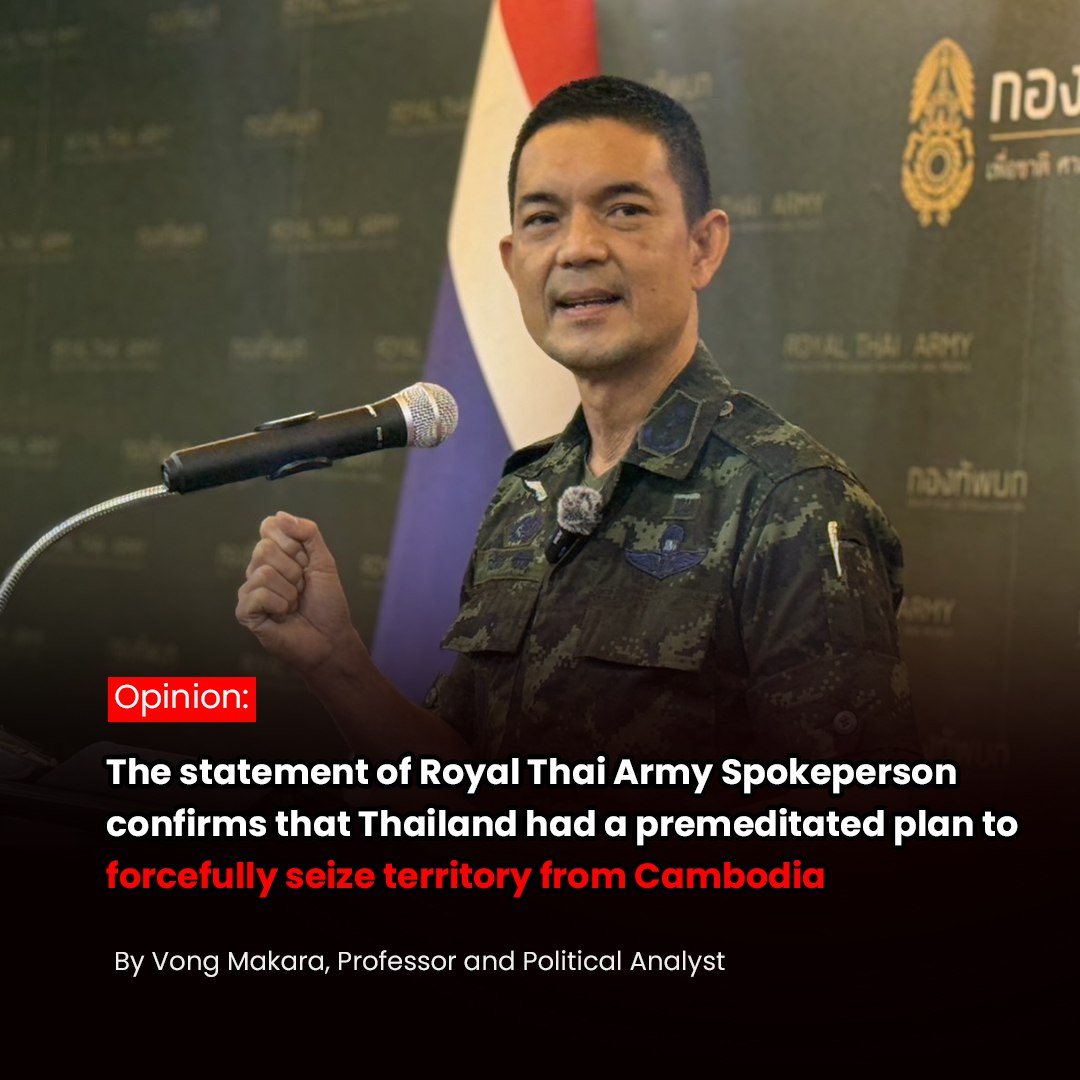
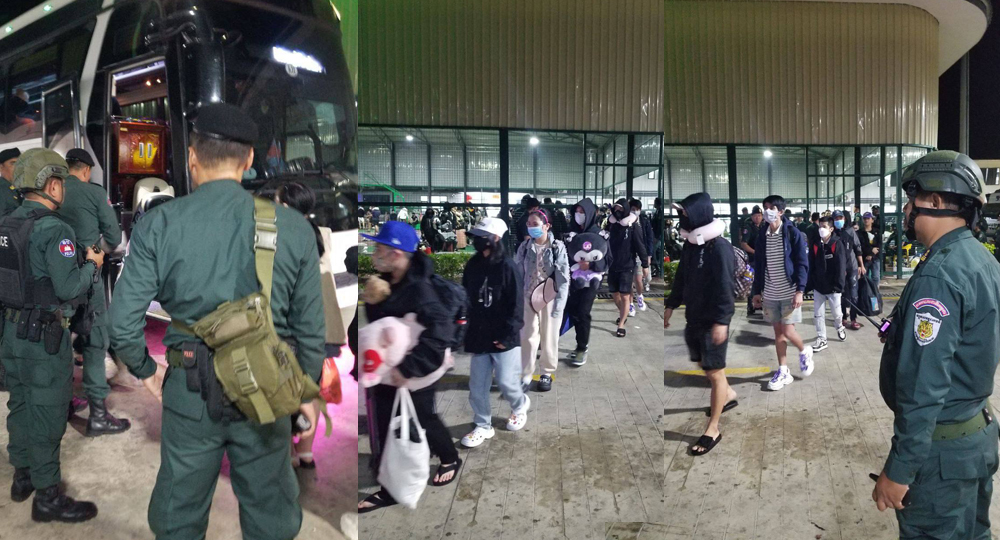
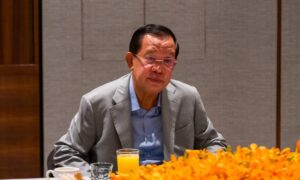
In a statement issued on the night of February 18, 2026, published on the official website of the Royal Thai Army, Major General Winthai Suvaree, spokesperson of the Royal Thai Army, responded to an interview of Cambodian Prime Minister Hun Manet with Reuters, in which he stated that the Thai army is occupying Cambodian territory and has laid shipping containers and barbed wire, preventing approximately 80,000 Cambodian displaced persons from returning home.
Major General Winthai Suvaree responded that Cambodia is fully aware that the disputed area belongs to Thailand. In the past, Thailand provided shelter to Cambodian people who fled from civil war. However, after the war ended, many Cambodian civilians and soldiers did not return to their own country but instead expanded their presence within Thailand’s sovereign territory. Thailand lodged numerous protests through official mechanisms, but Cambodia did not respond and did not resolve the issue by sending its citizens back to Cambodian territory.
Therefore, he said, these people should not be described as displaced persons as the Prime Minister of Cambodia claims, but rather a group that unlawfully and repeatedly encroached on Thailand’s sovereignty, causing Thai citizens to lose their rightful access to their land.
Through such statements, the general public may realize that the two past rounds of armed conflict—the first from July 24–28, 2025, and the second from December 7–27, 2025—were deliberate plans by the Thai army to seize and occupy territory, since Thailand considers these lands its own to be reclaimed. The claim by the spokesperson of the Royal Thai Army has put to rest a significant lingering question from the past: who fired first? The Thai side often accuses Cambodia of initiating attacks, while Cambodia insists it is the victim of Thai preemptive strikes.
However, it is now clear that the party with an actual plan to seize the territory was Thailand, because it considers the land belongs to Thailand and intends to reclaim it, according to the statement of the spokesperson of the Royal Thai Army. This is indeed very reasonable, because during the first armed attack, Thailand could not deliberately seize those positions when the first ceasefire came into effect at midnight on July 28, 2025.
Because its objective was not yet achieved, Thailand violated the ceasefire and launched a second attack on December 7, which lasted until the second ceasefire came into effect around 12:00 noon on December 27, 2025. After successfully seizing the territory as intended, Thailand destroyed all the homes of Cambodian civilians and looted all their properties, leaving nothing behind, and also went to the length of completely destroying other sacred sites in the areas. The Thai army established a fait accompli in order to assert its permanent control over this territory. Consequently, any doubts about who fired first are no longer an issue.
This raises the question: to whom does the territory actually belong? Is it Cambodia’s or Thailand’s? This issue is likewise straightforward, because if Thailand claims that the territory belongs to itself, why didn’t it use the JBC technical mechanism to conduct the survey as requested by Cambodia, and instead resort to military force to seize the territory? A survey by a team of experts under the JBC mechanism to determine whether the land belongs to Cambodia or Thailand is the only verifiable method, as Prime Minister Hun Manet has emphasized. Hopefully, Thailand had the audacity to carry out this action to bolster its image as not having illegally seized Cambodian territory, a position it has long asserted.
By Vong Makara, Professor and Political Analyst